

Why a 2-in-1 Electric Scissors and Rotary Cutter Makes DIY Projects Easier

DIY projects rarely involve just one material or just one type of cut.
One minute you may be breaking down cardboard for a storage project. The next, you are trimming felt, cutting fabric for upholstery, shaping leather, or following a curved pattern.
That is where a traditional single-purpose cutting tool can become limiting.
A cordless rotary cutter is excellent when you need fast, straight cuts through cardboard and other tougher materials. Electric scissors, on the other hand, give you better control when the project requires curves, shapes, and detailed trimming.
The Antive 2-in-1 Electric Scissors & Rotary Cutter was designed so you do not have to choose between the two.
With one cordless body and two interchangeable cutting heads, you can switch cutting styles in seconds and keep working on the same project.
The Problem With Using Only One Type of Cutter
There is no single blade style that is ideal for every DIY task.
A rotary cutting head naturally works well when you are moving through material in a relatively straight line. It is especially useful for projects involving cardboard, carpet, packaging, leather, and other materials where speed and consistent forward cutting matter.
But when you need to follow a curved template, cut around a corner, shape fabric, or make a detailed trim, a rotary blade may not offer the maneuverability you want.
That is where scissors become useful.
Powered scissors make it easier to follow curves and detailed shapes, especially through softer materials such as fabric and felt. But if you regularly break down boxes or make long straight cuts through tougher cardboard, scissors may not be the fastest or most convenient option.
For a DIY user, the compromise is obvious:
Buy a rotary cutter and sacrifice some precision on detailed cuts, or buy electric scissors and sacrifice some efficiency on tougher, straighter jobs.
The Antive 2-in-1 is built around eliminating that compromise.

Two Cutting Heads, One Cordless Tool
The Antive system includes both:
Scissors Head — for controlled curves, shaped cuts, trimming, and detail work.
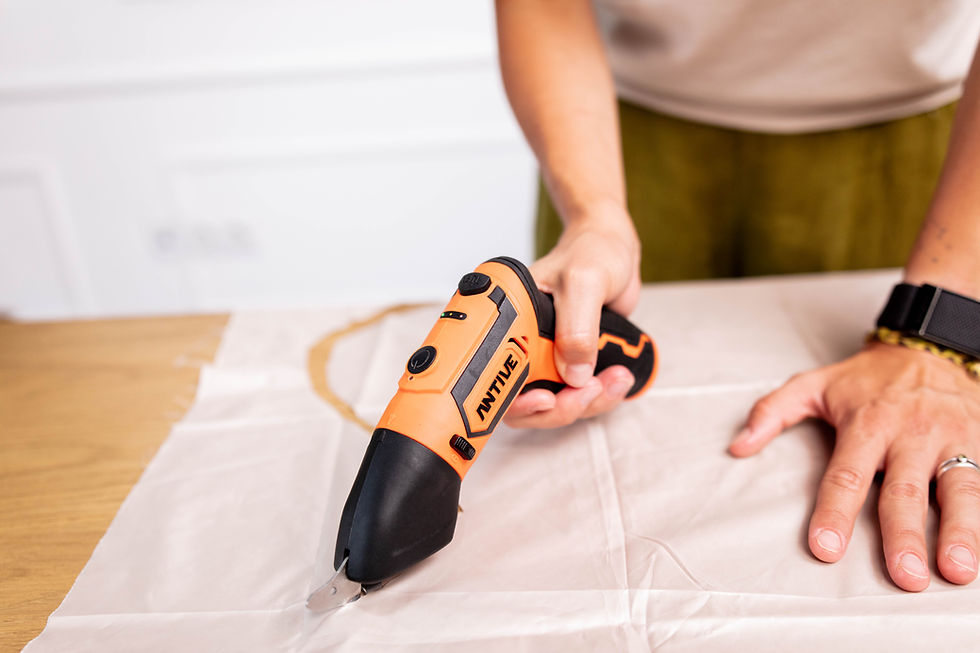
Rotary Cutter Head — for faster, straighter cuts and tougher materials.

Instead of stopping your project to find another tool, the cutting heads can be changed in approximately 2 seconds.
That matters more than it may sound.
Imagine making a custom storage organizer. You may first need to cut cardboard panels to size using long straight cuts. After that, you may need to trim fabric or felt to cover the panels, including curved corners or detailed shapes.
With a conventional setup, that could mean two separate powered tools.
With Antive, you simply change the head.
Better for DIY Projects With Mixed Materials
Many DIY projects combine materials rather than focusing on just one.
A home craft project might involve cardboard, fabric, felt, and leather. Upholstery work can require both straight material cuts and detailed trimming. Packaging projects might start with breaking down heavy cardboard and finish with cutting softer protective materials.
That is where a 2-in-1 cardboard cutting tool becomes particularly useful.
The Antive scissors head can handle shaped cuts through fabric, felt, and softer materials, with fabric cutting capability up to 8 mm.

When the project becomes tougher, switch to the rotary cutter head. It handles hard cardboard and carpet up to 3 mm thick and hard leather up to 4 mm thick.
The benefit is not simply having an extra attachment.
It is being able to choose the cutting action that better suits the material in front of you.
Straight Cuts When You Need Speed
For repetitive DIY tasks such as breaking down shipping boxes, trimming cardboard sheets, cutting carpet, or preparing material strips, speed matters.
The rotary head turns the Antive system into a cordless electric cardboard cutter designed for steady, forward cutting.
This can be particularly useful when:
Breaking down cardboard boxes
Cutting packaging material
Preparing straight cardboard panels
Trimming carpet
Cutting leather strips
Working on recycling projects
Preparing materials for home renovation or crafts
Instead of repeatedly opening and closing scissors through a long section of material, the rotary blade keeps moving through the cut.

Scissors When Precision Matters
DIY work is not always straight.
Templates, rounded corners, fabric patterns, decorations, upholstery pieces, and craft materials often require more control.
Switch to the scissors head, and the same cordless body becomes powered scissors suited to curves and detailed trimming.
This makes it useful for:
Fabric projects
Felt crafts
Upholstery
Soft leather
Pattern cutting
Curved shapes
Detail trimming
Decorative DIY projects
This is where having only a rotary cutter can become inconvenient.
The material itself may be cuttable, but the type of cut you need can make scissors a much better choice.

Switch Heads in About 2 Seconds
A 2-in-1 product only makes sense if changing between functions is easy.
That is why the Antive heads use a quick-change system designed to let you swap attachments in approximately 2 seconds.
There is no need to stop the project for a complicated conversion.
Finish your straight cardboard cut, remove the rotary attachment, install the scissors head, and continue with the detailed portion of the project.
For DIY users who frequently move between materials, this makes the tool feel less like two separate machines and more like one adaptable cutting system.
Change the Grip as the Project Changes
The cutting head is not the only part of the Antive tool that adapts.
Press the TURN button and the handle rotates 180°, allowing you to choose between pistol-style and pen-style positions.
This can be especially useful in DIY projects because materials are not always sitting conveniently on a flat workbench.

You may be cutting horizontally across a table one moment and vertically through a large cardboard box the next.
Instead of forcing your wrist into the same position, you can rotate the tool to better match the cutting direction.
Cordless Freedom for Longer Projects
DIY work often means moving around a workshop, garage, craft room, or home.
The Antive 2-in-1 is cordless and offers up to 3 hours of runtime per charge, so you are not tied to an outlet while working.
When it is time to recharge, the tool uses USB-C, and a USB-C charging cable is included with the complete set.
That combination makes it useful not only for quick craft projects but also for longer cutting sessions involving multiple materials.
Not Sure Which Head to Use? Let the App guide you.
One downside of having more than one cutting option is deciding which one is better for a particular material.
Antive addresses that with the guide app.
The app is free and requires no sign-in.
Take a photo of the material you want to cut, and the AI-assisted guide recommends which cutting head is better suited to the job.
For experienced DIY users, choosing a blade may already feel intuitive. For someone working with a new material, however, this feature removes some of the guesswork.
One Tool Instead of Two Electric Scissors
The biggest advantage of a 2-in-1 system is not simply that it has more features.
It is that you can avoid buying, storing, charging, and carrying two separate cordless cutting tools.
Instead of having:
one electric box cutter for cardboard + one pair of cordless electric scissors
you have:
one powered body + two specialized cutting heads.
That means fewer tools on the workbench and more flexibility when a project changes halfway through.
Is a 2-in-1 Cutter Better for DIY?
For someone who only breaks down cardboard boxes, a dedicated rotary cutter may be enough.
For someone who only cuts fabric patterns, electric scissors may be enough.
But DIY projects often sit somewhere in between.
You may work with cardboard today, fabric tomorrow, and leather or carpet next weekend. You may need a fast straight cut at the beginning of a project and a controlled curved cut five minutes later.
That is where the Antive 2-in-1 makes the most sense.
Instead of asking one blade to perform every job, you have two cutting systems available in the same cordless tool.
Use the rotary head when the project calls for speed and straighter cuts.
Use the scissors head when control, curves, and detail matter.
And when the project changes, switch heads in seconds and keep working.
One tool. Two cutting styles. More freedom to DIY your way.


Comments